Before the first foundation is laid, before the first blueprint is finalized, and before any human claims a piece of land as their own, a negotiation must take place. In Thailand, this is not a negotiation with a landowner or a government office, but a dialogue with the land itself—with its oldest, most essential inhabitant. This dialogue is given form through the San Phra Phum, the Thai Spirit House, a structure that stands as a profound testament to a culture that has never separated the physical world from the spiritual. ก่อนที่จะวางศิลาฤกษ์ก้อนแรก ก่อนที่พิมพ์เขียวจะเสร็จสมบูรณ์ และก่อนที่มนุษย์คนใดจะอ้างสิทธิ์ในที่ดินผืนใดผืนหนึ่ง การเจรจาจะต้องเกิดขึ้น ในประเทศไทย นี่ไม่ใช่การเจรจากับเจ้าของที่ดินหรือหน่วยงานราชการ แต่เป็นการสนทนากับผืนดินโดยตรง กับผู้อยู่อาศัยที่เก่าแก่และสำคัญที่สุด การสนทนานี้ปรากฏเป็นรูปธรรมผ่าน "ศาลพระภูมิ" ซึ่งเป็นโครงสร้างที่แสดงถึงวัฒนธรรมที่ไม่เคยแยกโลกทางกายภาพออกจากโลกทางจิตวิญญาณ
For YAKSHA Studio, the Spirit House is more than a cultural artifact; it is the ultimate expression of regenerative design. It is the first principle of building in harmony with nature: you must first provide a home for the spirit of the place before you build one for yourself. สำหรับ YAKSHA Studio ศาลพระภูมิมิใช่เป็นเพียงวัตถุทางวัฒนธรรม แต่เป็นการแสดงออกถึงที่สุดของการออกแบบเชิงฟื้นฟู (Regenerative Design) นี่คือหลักการข้อแรกของการสร้างสรรค์ที่สอดคล้องกับธรรมชาติ: คุณต้องจัดหาที่พำนักให้แก่จิตวิญญาณของสถานที่ก่อนที่จะสร้างที่อยู่สำหรับตนเอง
Beyond Superstition: Acknowledging the Genius Loci เหนือกว่าความเชื่อ: การยอมรับในจิตวิญญาณแห่งสถานะ (Genius Loci)
The tradition of the Spirit House has its roots in animistic beliefs that pre-date the arrival of Buddhism in the region. Animism, the belief that all objects, places, and creatures possess a distinct spiritual essence, is a worldview that sees the land not as an inert resource to be exploited, but as a living entity with its own consciousness and memory. This concept, known in the West as genius loci, or "the spirit of the place," is the foundation of all sacred architecture. ประเพณีเกี่ยวกับศาลพระภูมิมีรากฐานมาจากความเชื่อในลัทธิวิญญาณนิยม (Animism) ซึ่งมีมาก่อนการเข้ามาของพระพุทธศาสนาในภูมิภาคนี้ วิญญาณนิยมคือความเชื่อที่ว่าวัตถุ สถานที่ และสิ่งมีชีวิตทั้งปวงล้วนมีแก่นแท้ทางจิตวิญญาณ เป็นโลกทัศน์ที่มองว่าผืนดินไม่ใช่ทรัพยากรที่ไร้ชีวิตเพื่อการแสวงหาผลประโยชน์ แต่เป็นสิ่งมีชีวิตที่มีจิตสำนึกและความทรงจำเป็นของตนเอง แนวคิดนี้เป็นที่รู้จักในโลกตะวันตกว่า "จีนิอุส โลไซ" (genius loci) หรือ "จิตวิญญาณแห่งสถานที่" ซึ่งเป็นรากฐานของสถาปัตยกรรมอันศักดิ์สิทธิ์ทั้งมวล
To build a Spirit House is to acknowledge that we are guests on the land. It is a gesture of profound respect, an offering of shelter to the guardian spirits so they do not need to dwell in the main home or building, ensuring a harmonious coexistence. This act bridges the ancient and contemporary worlds, creating a protective spiritual barrier that brings peace and good fortune to all who live and work within its influence. การสร้างศาลพระภูมิคือการยอมรับว่าเราเป็นเพียงแขกผู้มาเยือนบนผืนดิน เป็นการแสดงออกถึงความเคารพอย่างสุดซึ้ง เป็นการถวายที่พักพิงแก่ดวงวิญญาณผู้พิทักษ์เพื่อที่ท่านจะได้ไม่ต้องสถิตอยู่ในบ้านหรืออาคารหลัก เป็นการรับประกันถึงการอยู่ร่วมกันอย่างกลมเกลียว การกระทำนี้เชื่อมโยงโลกยุคโบราณและยุคปัจจุบันเข้าด้วยกัน สร้างเกราะป้องกันทางจิตวิญญาณที่นำมาซึ่งความสงบสุขและโชคลาภแก่ทุกคนที่อาศัยและทำงานอยู่ภายใต้อาณาเขตนั้น
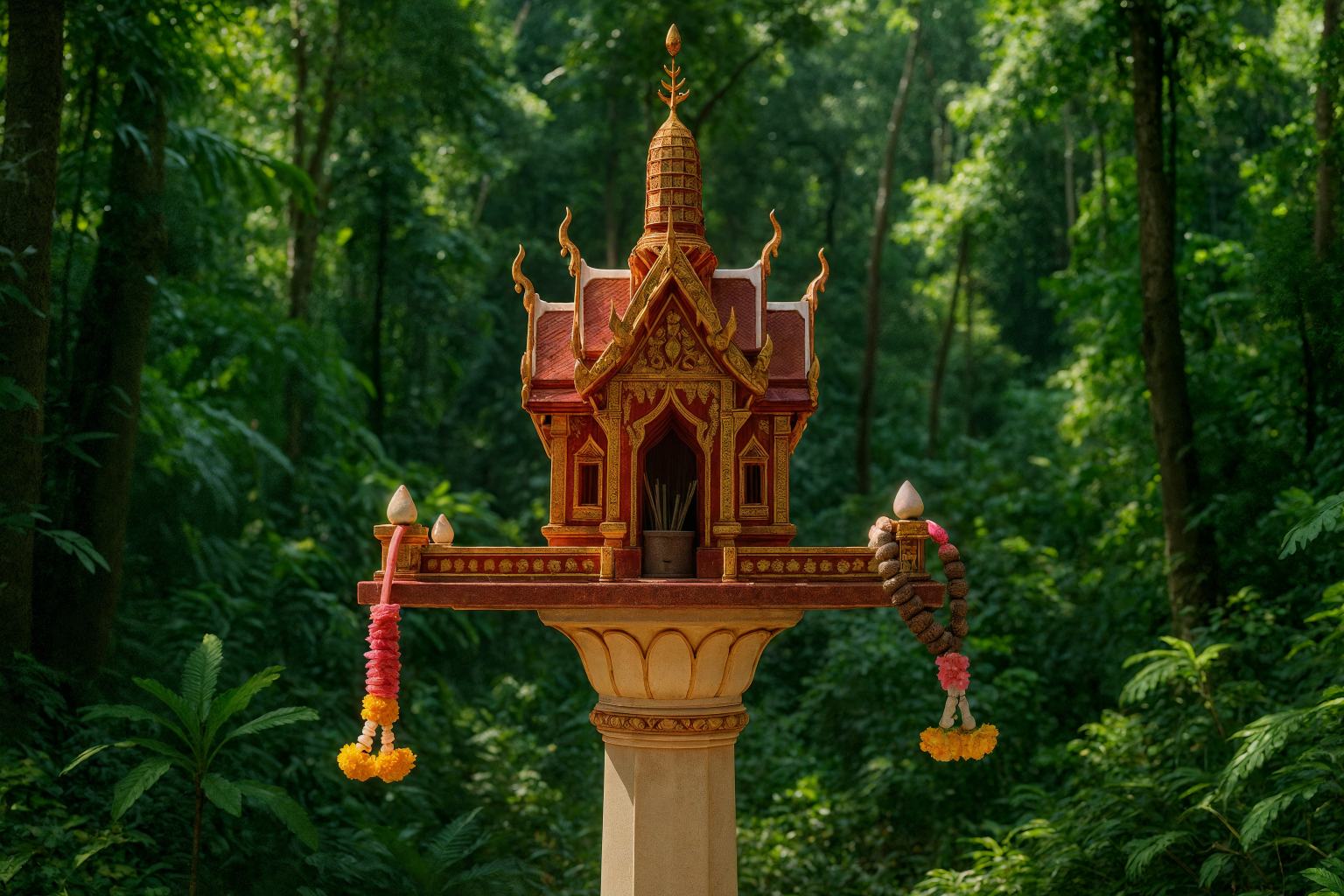
The Sacred Blueprint: Ritual and Precision พิมพ์เขียวอันศักดิ์สิทธิ์: พิธีกรรมและความแม่นยำ
The construction and placement of a Spirit House is a precise science, a form of practical geomancy akin to Vastu Shastra and Feng Shui. It is never an afterthought. A Brahmin priest or a knowledgeable monk is consulted to determine the most auspicious location and timing for the installation ceremony. การก่อสร้างและตำแหน่งการวางศาลพระภูมินั้นเป็นศาสตร์ที่แม่นยำ เป็นรูปแบบหนึ่งของภูมิพยากรณ์เชิงปฏิบัติที่คล้ายคลึงกับศาสตร์อย่าง วาสตุศาสตร์ และ ฮวงจุ้ย สิ่งนี้ไม่ใช่สิ่งที่ทำกันทีหลัง แต่ต้องมีการปรึกษาพราหมณ์หรือพระภิกษุผู้มีความรู้เพื่อกำหนดตำแหน่งและเวลาที่เป็นมงคลที่สุดสำหรับพิธีตั้งศาล
Proportions & Structure สัดส่วนและโครงสร้าง
| Componentส่วนประกอบ | Metricเมตริก | Imperialอิมพีเรียล | Thai Unitsหน่วยไทย |
|---|---|---|---|
| Main Pillar Heightความสูงเสาหลัก | 1.5 - 2 m1.5 - 2 ม. | 4.92 - 6.56 ft4.92 - 6.56 ฟุต | 0.75 - 1 wa0.75 - 1 วา |
| Overall Heightความสูงรวม | 1.5 - 2.5 m1.5 - 2.5 ม. | 4.92 - 8.20 ft4.92 - 8.20 ฟุต | 0.75 - 1.25 wa0.75 - 1.25 วา |
| Width & Depthความกว้างและความลึก | 0.75 - 1 m0.75 - 1 ม. | 2.46 - 3.28 ft2.46 - 3.28 ฟุต | 0.375 - 0.5 wa0.375 - 0.5 วา |
Symbolism of Components สัญลักษณ์ของส่วนประกอบ
- Pinnacle:ยอดแหลม: Representing Enlightenment, it functions as a cosmic antenna between worlds.สื่อถึงการตรัสรู้ ทำหน้าที่เป็นเสาอากาศเชื่อมต่อระหว่างโลกต่างๆ
- Roof:หลังคา: Adorned with intricate designs, representing protection from negative energies.ประดับด้วยลวดลายวิจิตร สื่อถึงการปกป้องจากพลังงานด้านลบ
- Main Pillar:เสาหลัก: Symbolizes stability and serves as a conduit between the physical and spiritual realms.เป็นสัญลักษณ์ของความมั่นคงและทำหน้าที่เป็นสื่อกลางระหว่างโลกทางกายภาพและจิตวิญญาณ
Alignment and Auspicious Timing การจัดวางและฤกษ์ยามอันเป็นมงคล
The rules of placement are not arbitrary. Orientation typically faces east or northeast to capture auspicious morning sun energy. The location must be prominent, yet respectful, avoiding proximity to toilets or having the main building's shadow fall upon it, which is considered unlucky. กฎเกณฑ์การจัดวางไม่ได้กำหนดขึ้นมาลอยๆ โดยทั่วไปจะหันหน้าไปทางทิศตะวันออกหรือตะวันออกเฉียงเหนือเพื่อรับพลังงานมงคลจากแสงอาทิตย์ยามเช้า ตำแหน่งต้องโดดเด่นแต่ยังคงไว้ซึ่งความเคารพ หลีกเลี่ยงการอยู่ใกล้ห้องน้ำหรือการที่เงาของอาคารหลักทอดทับลงมา ซึ่งถือเป็นลางไม่ดี
Using a Lunar Calendar, auspicious days are selected. Wednesdays or Thursdays are often preferred, along with the 2nd, 4th, 5th, 9th, or 11th day of the waxing or waning moon. จะมีการใช้ปฏิทินจันทรคติเพื่อเลือกวันที่เป็นมงคล โดยมักจะนิยมวันพุธหรือวันพฤหัสบดี รวมถึงวันที่ 2, 4, 5, 9 หรือ 11 ของข้างขึ้นหรือข้างแรม
The Installation Ritual พิธีกรรมการตั้งศาล
Ground Preparation การเตรียมพื้นที่
The ceremony begins by digging a hole at the chosen site. Into this, nine stakes made from auspicious woods are driven. Each type of wood is selected for its unique protective and prosperous qualities. Sacred items like jewelry and a Yantra plate are also placed in the hole to create a matrix of positive energy. พิธีเริ่มต้นด้วยการขุดหลุม ณ ตำแหน่งที่เลือกไว้ จากนั้นตอกหลักไม้มงคล 9 ชนิดลงไป ไม้แต่ละชนิดถูกเลือกมาด้วยคุณสมบัติเฉพาะตัวในการปกป้องและเสริมความเจริญรุ่งเรือง นอกจากนี้ยังมีการวางของมงคล เช่น เครื่องประดับและแผ่นยันต์ ลงในหลุมเพื่อสร้างข่ายพลังงานบวก
The Nine Auspicious Woods ไม้มงคล 9 ชนิด
- Teak (สัก):สัก (Teak): Symbolizes resilience and long-lasting protection.สัญลักษณ์ของความแข็งแกร่งและการปกป้องที่ยั่งยืน
- Jackfruit (ขนุน):ขนุน (Jackfruit): Associated with abundance and support.เกี่ยวข้องกับความอุดมสมบูรณ์และการเกื้อหนุน
- Bodhi Tree (โพธิ์):โพธิ์ (Bodhi Tree): Represents spiritual awakening and divine protection.สื่อถึงการตื่นรู้ทางจิตวิญญาณและการคุ้มครองจากสิ่งศักดิ์สิทธิ์
- Sandalwood (จันทน์):จันทน์ (Sandalwood): Believed to purify and attract benevolent spirits.เชื่อว่าช่วยชำระให้บริสุทธิ์และดึงดูดวิญญาณที่ดีงาม
- Bamboo (ไผ่):ไผ่ (Bamboo): Symbolizes flexibility, strength, and wards off negative energy.สัญลักษณ์ของความยืดหยุ่น ความแข็งแกร่ง และปัดเป่าพลังงานลบ
- ...and other regional choices like Mango, Coconut, and Pine....และไม้มงคลอื่นๆ ตามแต่ละท้องถิ่น เช่น มะม่วง มะพร้าว และสน
Invocation and Offerings การอัญเชิญและถวายเครื่องสักการะ
Once the house is erected, the ceremony director chants incantations to invite the Phra Phum (guardian spirit) to inhabit their new home. Statues are installed, often a Buddha or Phra Chai Mongkon, and sanctified with chants. Offerings of garlands, incense, water, and food are presented to welcome and honor the spirit. เมื่อตั้งศาลเสร็จสิ้น ผู้ประกอบพิธีจะสวดคาถาเพื่ออัญเชิญพระภูมิ (วิญญาณผู้พิทักษ์) ให้เข้ามาสถิตในที่พำนักใหม่ มีการติดตั้งรูปเคารพ ซึ่งมักเป็นพระพุทธรูปหรือพระชัยมงคล และทำพิธีปลุกเสกด้วยบทสวด จากนั้นจึงถวายเครื่องสักการะ เช่น พวงมาลัย ธูป น้ำ และอาหาร เพื่อต้อนรับและให้เกียรติแด่ดวงวิญญาณ
The Itipiso Chant บทสวดอิติปิโส
A revered Pāli recitation honoring the Buddha's nine supreme qualities, the Itipiso is chanted to invite enlightened beings and bless the ceremony. บทสวดภาษาบาลีอันศักดิ์สิทธิ์เพื่อสรรเสริญพระพุทธคุณ 9 ประการของพระพุทธเจ้า บทอิติปิโสใช้สวดเพื่ออัญเชิญเหล่าผู้รู้แจ้งและประสาทพรให้แก่พิธี
The YAKSHA Perspective: The First Step in Saving Koh Phangan มุมมองของ YAKSHA: ก้าวแรกสู่การพิทักษ์เกาะพะงัน
In an era of rapid, often thoughtless development, the Spirit House offers a powerful antidote. On an island like Koh Phangan, whose very essence is tied to its sacred nature and spiritual heritage, this tradition is more critical than ever. The environmental crises we face—water shortages, soil degradation, sewage problems—are symptoms of a deeper spiritual crisis: a disconnection from the genius loci. ในยุคแห่งการพัฒนาที่รวดเร็วและมักขาดการไตร่ตรอง ศาลพระภูมิเปรียบเสมือนยาถอนพิษอันทรงพลัง บนเกาะอย่างเกาะพะงันซึ่งมีแก่นแท้ผูกพันอยู่กับธรรมชาติอันศักดิ์สิทธิ์และมรดกทางจิตวิญญาณ ประเพณีนี้ยิ่งมีความสำคัญอย่างยิ่งยวด วิกฤตการณ์ด้านสิ่งแวดล้อมที่เราเผชิญอยู่ ไม่ว่าจะเป็นการขาดแคลนน้ำ ความเสื่อมโทรมของดิน หรือปัญหาน้ำเสีย ล้วนเป็นอาการของวิกฤตทางจิตวิญญาณที่ลึกซึ้งกว่า นั่นคือการตัดขาดจาก "จิตวิญญาณแห่งสถานที่"
At YAKSHA Studio, we believe that true sustainability begins with this ancient practice. Before we design a single water catchment system or plan a permaculture food forest, we must first ask permission from the land. The Spirit House is the physical manifestation of this request. It is the most fundamental form of Vastu and Feng Shui, an alignment with the unseen energies that govern a place. ที่ YAKSHA Studio เราเชื่อว่าความยั่งยืนที่แท้จริงเริ่มต้นจากประเพณีโบราณนี้ ก่อนที่เราจะออกแบบระบบกักเก็บน้ำแม้แต่ระบบเดียว หรือวางแผนสร้างป่าอาหารตามแนวทางเพอร์มาคัลเจอร์ เราต้องขออนุญาตจากผืนดินเสียก่อน ศาลพระภูมิคือรูปธรรมของการขออนุญาตนั้น เป็นรูปแบบพื้นฐานที่สุดของวาสตุศาสตร์และฮวงจุ้ย คือการปรับตัวให้เข้ากับพลังงานที่มองไม่เห็นซึ่งควบคุมสถานที่นั้นๆ
To build one is to declare that we are not conquerors of nature, but partners with it. It is the first, most vital step in creating self-sustaining living spaces that heal, rather than harm, the ecosystem. For Koh Phangan to be saved, we must remember how to listen to the land, and the Spirit House is how we begin that conversation. การสร้างศาลพระภูมิคือการประกาศว่าเราไม่ใช่ผู้พิชิตธรรมชาติ แต่เป็นหุ้นส่วนกับธรรมชาติ นี่คือก้าวแรกที่สำคัญที่สุดในการสร้างพื้นที่อยู่อาศัยที่ยั่งยืนด้วยตนเอง ซึ่งช่วยเยียวยาแทนที่จะทำลายระบบนิเวศ เพื่อที่จะรักษาเกาะพะงันไว้ เราต้องหวนรำลึกถึงวิธีการรับฟังเสียงของผืนดิน และศาลพระภูมิคือจุดเริ่มต้นของการสนทนานั้น